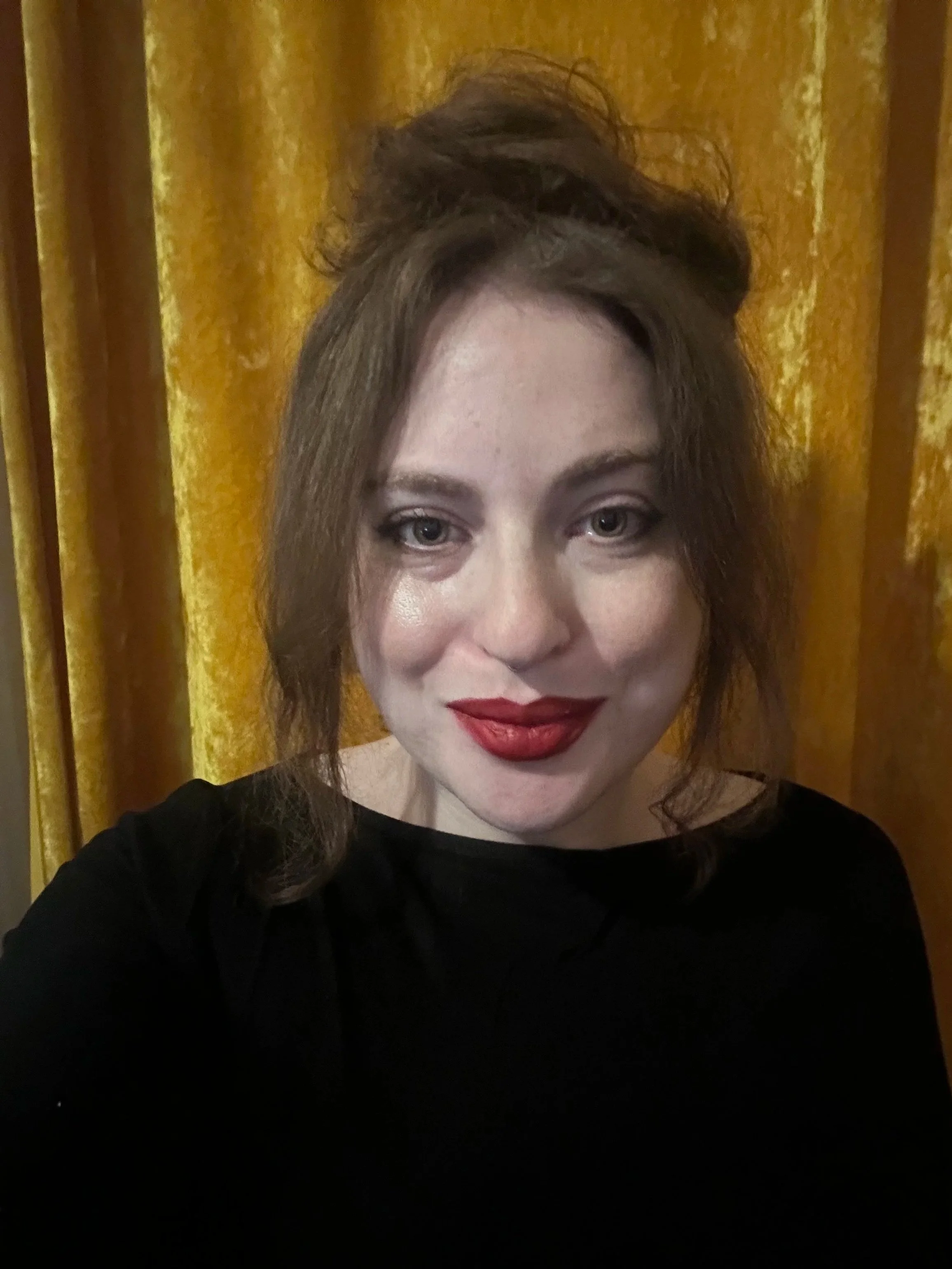
Dr. Spinner holds a doctorate in English and a Certificate in Feminist Studies from Duke University, She received an MA in English from Georgetown University where she was awarded an English Fellowship at Georgetown's Center for New Designs in Learning and Scholarship (CNDLS).
Dr. Cheryl Spinner is an Instructor in the Writing and Rhetoric Program at Duke University, where she teaches at the intersection of rhetoric, cultural studies, and material art practice. As a scholar-artist, she is currently developing a framework she terms "occult archivism"—a practice that bridges archival theory and the supernatural to interrogate how we unearth, embalm, and encounter spectral histories.
This methodology unites her creative and academic inquiry, challenging disciplinary boundaries between traditional archives and lived experience. Her current project, Accessory Row: Archive Fever and the Taylor-Burton Affair—submitted to the Andy Warhol Foundation Arts Writers Grant in May 2026—serves as a primary application of this framework. Accessory Row investigates the material "excess" of mid-century cinematic celebrity, contrasting the bureaucratic artifacts of the Hollywood studio system against the personal, spectral remnants of the record. Centered on the legendary Elizabeth Taylor, the project unpacks the icon as an ongoing, fragmented entity. By tracking Taylor's presence through discarded ephemera and private snapshots, Dr. Spinner explores how the star remains tethered to the archive long after the cameras have stopped rolling. Through vintage film photography and archival ephemera, she interrogates the tension between the physical archive and the persistent, haunting vitality of the historical icon.
The spectral also anchors her academic manuscript, Debunk Me Not: Intuitive Historiography and Spiritualist Archives, which critiques how contemporary scholarship often ridicules those employing supernatural methods to make sense of the world. Through "intuitive historiography," Dr. Spinner offers an alternative analytical method, leaving room for the uncertain in the academic treatment of spirit mediumship, Tarot, and spirit photography. Her research has been featured in invited lectures at institutions such as Cornell University and UW-Madison’s Center for the History of Print and Digital Culture.
Her creative practice remains inextricably linked to these inquiries. She has completed the screenplay Pixie, inspired by her expertise on Pamela Colman Smith and the Rider-Waite Tarot, and she remains a deeply active photographer. Utilizing a variety of analog techniques—including a Bolex, her Hasselblad (fondly named Hedy), a Holgaroid, and a Polaroid Land Camera—she creates multimedia productions that serve as integral components of her critical arguments. A 2026 recipient of the North Carolina Arts Council Artist Support Grant, Dr. Spinner has presented her photographic research at national conferences, including the American Studies Association and the Association of Jewish Studies.
Dr. Spinner’s commitment to "making" as a mode of knowing extends into the classroom, where she mentors students in non-traditional projects, such as the creation of personal grimoires. An avid roller skater, a fan of film noir, and a devoted cat person to her feline muses, Gilda and Rosemond, she invites you to explore her research blog, Electric Ladies Zap,

All work on this site is licensed under a Creative Commons Attribution-NonCommercial-NoDerivatives 4.0 International License.